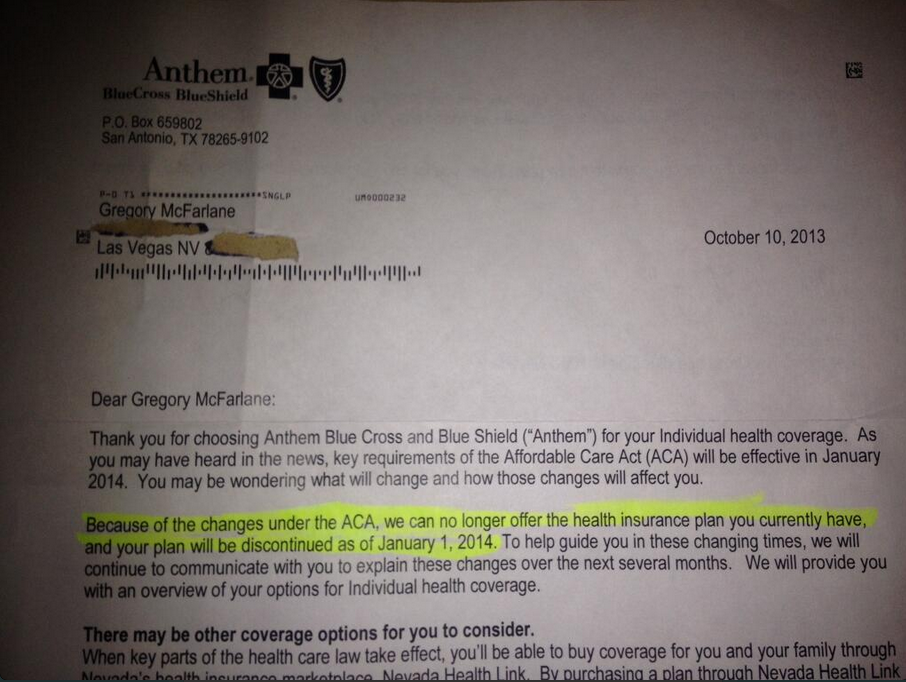
Optionality. The Choice is Yours.

"I've got an 83% chance of staying alive! Those are great odds."

“I’ve got an 83% chance of staying alive! Those are great odds.”

Don’t make dumb bets.

We recently read Antifragile, the latest from iconoclast and self-described flâneur Nassim Nicholas Taleb. If you’re unfamiliar with Taleb, he’s most famous for writing the predecessor to Antifragile,a book called The Black Swan. Its main argument is that there are certain events that defy prediction and that you can’t do anything about, other than minimize your risk of exposure to their negative effects (if any) and maximize your risk of exposure to any positive ones. The title derives from the Australian bird of the same name, which Europeans discovered in the late 17th century, thus destroying the part of their worldview that held that swans are definitively white.

This isn’t a review of Antifragile. (Alright, here’s a review: Buy it, then read it slowly and repeatedly.) However, today we are concerning ourselves with one of Taleb’s fundamental recommendations: Put yourself in situations where the potential for a great reward is offset by the potential for a small loss, and avoid the opposite scenarios. If you need a concrete example, Taleb suggests that you should live in a big city. (He lives in New York.) That way you can increase the likelihood of having random encounters with people who can benefit you. Go to enough cocktail parties on the Upper East Side and you’ll find someone who can look at your business proposal, or at least put you in touch with someone who can.

On a macro scale, Taleb cites federal government intervention in the economy that’s always done with the promise of a (modest) benefit, yet invariably ends with (unanticipated, gigantic) costs. Fannie Mae and Freddie Mac will serve as the definitive examples of this until something greater and more destructive comes along. Single-payer healthcare, maybe. The temptation to take the path of least resistance, when resisting can result in disaster, never enters these bureaucrats’ vacuous heads.

Which brings us to a real-world example of our own experience. Last summer, your humble blogger got a speeding ticket. 40 mph in a 35 zone, on a moderately used divided 4-lane road that’s flanked by a series of car dealerships. Shortly after they’d closed for the day. Meanwhile, not 100 yards away on the nearby U.S. highway, several drivers were cruising in the passing lane and thus driving far more dangerously than anyone driving in excess of 5 mph in a commercial zone would be. But we digress.

The ticket is exorbitant. $205, but the very act of going down to the county court house and acknowledging receipt of the ticket will knock it down to $140 and a non-moving violation (i.e., no harm to the driver’s record and no disclosure to the insurer.)

Or we could fight it. Which carries a potential risk and a potential reward. Let’s see what a rational person, or at least a Taleb reader, should do in this situation.

Choose not to go to court, and we’re looking at a certain debit of -$140. So that’s our baseline. Proceed on the most conservative path possible, the equivalent of buying T-bills, and that’s how much we’ll be out. So let’s consider that $140 an all-but-irretrievable sunk cost, and proceed from there. What happens if we fight the ticket? There are 2 possible outcomes:

  1. Not guilty/case dismissed. Net gain, +$140.
  2. Guilty. This one’s more complicated. The fine will be for the full amount of the ticket, $205. A guilty verdict also means 1 point on the license, which, as best we can estimate, will result in a 15% increase in premia over the next 3 years. That’s about another $500, ignoring the time value of money. Sum it and that’s a net loss of $565. (Remember that we’ve already accepted that we’re down $140 by doing nothing and paying the reduced fine already offered by the court.)

So by taking the risk of going to court, one of 2 results will happen – a $140 gain, or a $565 loss. Neither of which mean anything without examining our chances in court.

Our case is less than airtight. We did everything you’re supposed to (take video of the crime scene, come up with a list of questions to ask the officer, and then request one continuance after another), but we’ll be going up against an officer who’s so diligent that he went to the trouble of writing the radar gun’s calibration data on the ticket. He’s been on the force for 6 years, has already been an officer involved in an officer-involved fatal shooting, makes 6 digits a year and looks about 19 years old, so the likelihood of him having retired before the court date is slim. If he gets 3 weeks of vacation a year, the chance of the trial happening during one of them is about 6%. If he shows up, we can pencil in an L.

Our research indicates that officers show up for similar cases at least 60% of the time, and we could probably jack that up a few percentage points. So that’s a reduced chance of winning (enjoying a $140 gain), and a substantially greater chance of losing (incurring a $565 cost.) Even a lottery ticket, though its odds are atrocious, offers a huge payoff balanced with a tiny cost. Fighting this speeding ticket offers the opposite.

We’ll be contacting the prosecuting attorney and writing our $140 check tomorrow.

Whole Life Insurance, a/k/a Actuarial Rustproofing

"Those few inches of air between your underbody and the road can MURDER a car, lemme tell ya..."


Life insurance is supposed to keep your survivors’ financial lives operating without interruption should you buy the farm. If you’re rational enough to acknowledge that you might die and leave dependents, but not so rational as to compare the likelihood of you leaving your family destitute with the price of insurance, then perhaps a term policy is for you. You pay fixed amounts on a regular schedule, and if you fulfill your part of the covenant by dying, your family is covered.

With a term policy in effect for a fixed number of years (hence its name), the term expires and you buy another policy. If you survive the term, you spend thousands of dollars and receive nothing of value except the intangible quality of “protection”, which it turns out you never needed. Incredibly, it’s easy to make the argument that this type of policy, the one that gives you a -100% return, is the best type of life insurance. Beyond term insurance, sometimes people looking for coverage kid themselves into seeing life insurance as an investment, rather than a financial fire extinguisher that will probably spend its entire existence mounted in a bracket in your kitchen.

Over time, financial instruments always increase in complexity proportional to their profit margins (a recently discovered economic law, temporarily dubbed “McFarlane’s Shift”.) In that spirit, the insurance industry created classes of “investment” policies that went beyond term life insurance. These (in chronological order of invention; whole life, universal life and its variants) claim to foster your money’s growth, something term policies don’t do.

“Whole life” policies aren’t in effect for a fixed term, but rather – appropriately enough – the holder’s whole life. They carry a cash value that’s accrued throughout the duration of the policy. Not that there’s anything wrong with cash values in and of themselves, but investing and insuring are different objectives. To confirm that, if you die while your whole life policy is in effect, your beneficiary doesn’t get the cash value. Just the death benefit.

It’s sound financial advice to look at each transaction from the other party’s perspective. Is this exchange value-for-value, or is someone getting the short end? An insurer who moves you from a term policy to a more expensive whole life one incurs zero additional risk. That excess is pure loss for one party, pure profit for the other. Most mutual funds will almost certainly offer a better 30-year return than the modest percentage points you can expect from a whole life policy.

Understand opportunity cost. The money you invest in a whole life policy is money you now can’t spend elsewhere. Investing is one thing, protecting your family is another. If it’s protection you want, then it’s protection you should pay for.

A universal life policy is similarly pricey, one major difference from a whole life policy being that with the latter, you can modify the death benefit (and thus the premia) through the policy’s duration. If you increase the premium, the surplus goes into investments that aren’t subject to income tax, but that must be approved by your insurer. And the holdings are protected from creditors. In other words, only use this if you’re a rich person looking for a tax shelter. When you die, your polo-playing granddaughters can settle the tax bill with universal life proceeds.

But even with a basic term policy, the young father who thinks he’s prudent by “taking care of” his stay-at-home wife and bevy of offspring can easily forget that time progresses. Your kids aren’t always going to be financial drains. (Hard to believe, but it’s true.) Your earning power will likely increase throughout your career. And your investments, if you choose wisely and start early, will increase too. If life goes like that, according to something resembling a plan, then any money you’ve spent on life insurance has been wasted. This despite what any insurer might tell you.

If you’re retired, or getting there, life insurance is likely a losing proposition regardless of your net worth. Your family should depend less and less on your income as the years progress. Which is a cause to rejoice, not to buy insurance. And of course the older you get, the greater your monthly payments. Your cardiologist might care that you’re running 30 miles a week. Your insurer, less so.

There are even people who buy life insurance policies for their children, which is the equivalent of issuing a formal declaration of war on your money. The rationale among some parents who buy such policies is that were the child to die, the parent would be so distraught that she couldn’t bring herself to ever again function at a job. Tabling the ethical question of why suffering a tragedy would disqualify someone from being productive, why would you spend disposable income on something that pays a return only if your child dies? There are cheaper ways to tempt fate.

It’s hard to win with life insurance, especially the investment class of life insurance. If you want to leave a legacy for the succeeding generations, there are Dow stocks, index funds, blue-chip stocks…even the most conservative investments give you less risk of loss (if you buy term) and far less overhead (if you buy an investment policy.)

This article is featured in:

**Baby Boomers Blog Carnival One Hundred Thirty-eight Edition**

The Last Book Review (Part II of II)

Looks like someone needs to buy Control Your Cash: Making Money Make Sense

If you missed Part I, check here.

Dan Thompson’s arguments in Discovering Hidden Treasures are largely on point, even if he evidently hasn’t bought a starter home in some time. The hopefully titled American Recovery and Reinvestment Act is indeed a dismal failure. Our elected federal representatives spend an obscene and unsustainable amount of money. Health care isn’t so important that bureaucrats need to keep it out of the hands of profit-seekers; rather, it’s so important that profit-seekers need to keep it as far as possible from bureaucrats. If you tax people for making a lot of money, they’ll respond to the incentive by working less or moving to a more favorable jurisdiction, thus defeating the purpose of increasing their taxes in the first place.

Thompson speculates: what if our elected representatives decide that maybe 401(k)s, the tax-free boon that so many of us are counting on for retirement, should be taxed after all? Will a government really stay that true to its word – especially when that word was given to the citizenry by an almost entirely different set of politicians from a generation ago? The book’s first worthwhile sentence appears at the quarter turn:

Most families and business owners make financial decisions out of necessity rather than preparation.

That’s in the middle of a tangential reference to Thompson’s career as a competitive water skier. He follows it up with his first piece of non-obvious advice, which is not to fixate on rate of return.

Huh? Why the hell not? What should I care about if not this?

He gets to this in due time…but even the fun of pointing out examples of the author’s inability to write gets old after a while. Thompson points out that when people retire, they should earn money from their investments rather than from working. Well, thanks for that.

Thompson intermittently inserts more stories about his childhood throughout the book, presumably to give a dry topic a human face. But the stories are dreadful. No one cares what vegetable he hated as a kid. His arguments often start off logically; e.g. Social Security won’t be there for you, so you need to invest for your own retirement. But then he tells us that standard retirement plans – 401(k)s, IRAs – are bad.

Huh?

He argues that retirement plans are bad because the people invested in them assume that

  • they’ll grow
  • when you start drawing from them, you won’t be in a punitive tax bracket.

He adds that mutual fund companies will screw you by assuming you’re too lazy or incompetent to do the math. They’ll claim that a 10% annual return followed by a -10% return is a 0% return, rather than the -1% return it really is.  Thompson maintains that you shouldn’t finance anything, e.g. a truck, that’s going to depreciate. (Agreed. As we say here at Control Your Cash, buy assets and sell liabilities. But good Lord, does it take Thompson a while to get there.)

To build wealth, Thompson recommends you create a “private banking system”, which is a roundabout way of saying (we think) incorporate and pay yourself first.

In the second half of Discovering Hidden Treasures he touts the financial metric of Economic Value Added, which is just after-tax profit less cost of capital. Thompson says EVA is important because when a business or person subtracts capital from profit, it forces him/her/it to put every dollar to work. If your capital isn’t earning you interest, put it somewhere where it will.

Finally, almost 2/3 of the way through, Thompson has all the answers for where to put your money. Someplace better than a retirement plan (see above.) Someplace better than a bank, which charges interest. His perfect vehicle for stashing your money?

Mother-loving whole life insurance.

It’s at this point that we’d have felt cheated had we paid for our review copy of Discovering Hidden Treasures. See the previous post for why whole life insurance is a waste of money.

The most entertaining line of the book:

If you take 1000 people from birth to death, 75% are still alive at age 65. So it would be safe to say that statistically speaking 3 out of 4 people will die after age 65.

Wait, how do you figure?

Notes for the author. This is not a comprehensive list:

  • It’s “midst”, not “mist” (p. 11)
  • principles/principals? Seriously? This confuses you? (p. 26)
  • a plural noun don’t takes a singular verb. (all over)
  • if something’s “unprecedented”, you don’t need to tell us it’s “never been seen before” (p. 28)
  • for the love of God, when you type “$” you don’t have to write out the word “dollars”. Never. Ever. In English, we even call that handy typographical marvel the “dollar sign”. It has “dollar” in it! (everywhere)
  • a thing can’t be “very unique”. It’s either unique or it isn’t.
  • Roth IRAs aren’t capitalized. Well, the IRA part is but the Roth isn’t. (p. 35) It’s a guy’s name, not an acronym.
  • saying that a particular URL “can be found on the web” and including the “www” doesn’t exactly paint you as tech-savvy.
  • things don’t “yo-yo up and down”. The verb “yo-yo” implies the direction the thing takes.
  • question marks end questions. Periods end statements. (p. 53)
  • using “needs” as a noun is all sorts of douchey. (throughout)
  • You can get something free (of charge.) You can get it for nothing. You can’t get it “for free.”
  • And above all, passages are slowed down by use of the passive voice. (See what was done there by us?)